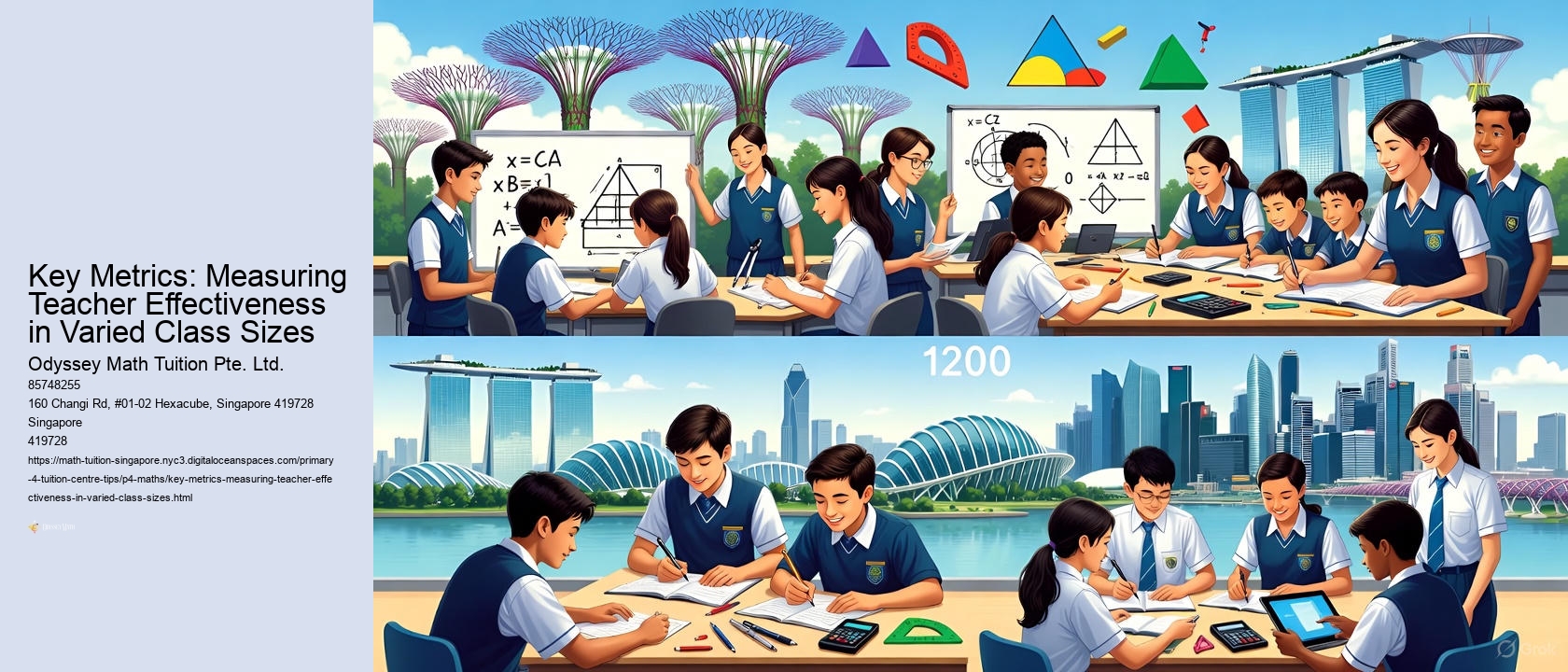
Singapore parents, kiasu and kiasi as we are, we all want the best for our children, especially when it comes to education. Primary 4. That's when things start to get real, right? It's not just about singing nursery rhymes anymore; it's about laying the foundation for PSLE and beyond. Choosing a Singapore primary 4 tuition centre tips becomes crucial at this stage. But how do we know if a teacher, be it in school or at a tuition centre, is truly effective? And how do class sizes play a part in all this? Let's dive in, shall we?
We all know that in Singapore, mathematics is the queen (or king!) of subjects. Ace math, and you've got a head start in life. With AI becoming more and more prevalent, a strong foundation in mathematics isn't just about getting good grades; it's about future-proofing your child's career. Think about it: data science, engineering, finance – they all rely heavily on mathematical principles. So, finding a tuition centre that emphasizes effective math teaching is super important.
And speaking of effective teaching, let's not forget the classroom environment. Is it conducive to learning? Does the teacher engage the students? These are the questions we need to ask when evaluating our child's learning experience. After all, a happy and engaged child learns better, kancheong spider parents will agree!
So, how do we actually measure teacher effectiveness? It's not just about looking at exam scores (although, let's be honest, that's a big part of it!). Here are some key metrics to consider:
Fun fact: Did you know that Singapore's education system consistently ranks among the best in the world? But that doesn't mean we can afford to be complacent! We need to constantly strive for improvement and ensure that our children are receiving the best possible education. Also, one of the choosing a singapore primary 4 tuition centre tips is to ask around other parents!
Now, let's talk about class size. In Singapore, class sizes can vary quite a bit, from smaller classes in some private schools to larger classes in public schools. So, how does class size affect teacher effectiveness?
Subtopics:
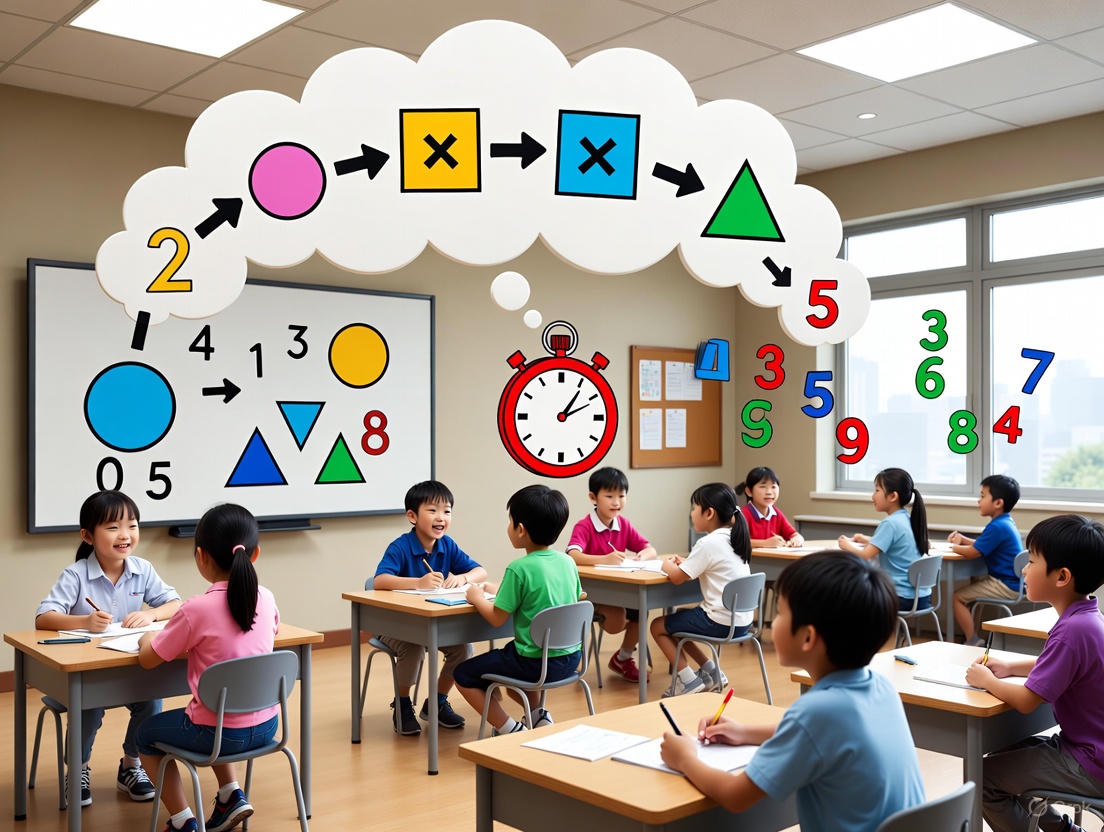
Smaller class sizes generally allow for more individualized attention. Teachers can spend more time with each student, addressing their specific needs and providing more personalized feedback. This can be particularly beneficial for students who are struggling with certain concepts.
Larger class sizes, on the other hand, can foster a more collaborative learning environment. Students have the opportunity to learn from each other and develop their teamwork skills. Also, teachers in larger classes often have to be more creative and innovative in their teaching methods.
Ultimately, the ideal class size depends on the individual student and the teacher's ability to manage the classroom effectively. Some students thrive in smaller classes, while others do well in larger classes. It's important to find a learning environment that suits your child's needs and learning style. When you are choosing a singapore primary 4 tuition centre tips, always ask about the teacher-student ratio.
Interesting facts: The history of tuition in Singapore is a long and fascinating one. It has evolved from a niche service for struggling students to a mainstream phenomenon that many parents see as essential for their child's success. This is mainly because of the competitive education landscape in Singapore.
So, there you have it. Metrics for Evaluating Class Size Effectiveness in Primary 4 Tuition . In today's competitive educational landscape, many parents in Singapore are hunting for effective methods to enhance their children's understanding of mathematical principles, from basic arithmetic to advanced problem-solving. Creating a strong foundation early on can significantly improve confidence and academic achievement, aiding students handle school exams and real-world applications with ease. For those considering options like primary 4 tuition it's essential to focus on programs that highlight personalized learning and experienced guidance. This method not only tackles individual weaknesses but also fosters a love for the subject, contributing to long-term success in STEM-related fields and beyond.. A little insight into teacher effectiveness and the importance of choosing the right learning environment for your child. Remember, don't play play with your child's education! Do your research, ask questions, and find a tuition centre that aligns with your child's needs and learning style. Good luck, parents, and may your children all score well in their exams!
Right, parents, let's talk real talk. We all want our kids to kiasu (that's Singaporean for "afraid to lose") and ace those exams, right? Primary 4 can feel like the start of a whole new ball game, especially when you're thinking about PSLE down the road. So, how do we know if our child's laoshi (teacher) – be it in school or at a tuition centre – is really effective?
We're talking about cold, hard results, lah. In a modern time where ongoing skill-building is crucial for occupational growth and personal development, prestigious universities worldwide are dismantling obstacles by delivering a wealth of free online courses that cover diverse topics from computer science and business to social sciences and wellness sciences. These initiatives permit students of all backgrounds to access top-notch lessons, projects, and tools without the economic load of traditional enrollment, commonly through platforms that provide convenient scheduling and interactive elements. Exploring universities online free courses opens pathways to elite universities' insights, enabling driven individuals to upskill at no cost and obtain qualifications that improve CVs. By providing premium learning readily obtainable online, such programs encourage international equality, support marginalized populations, and foster advancement, proving that excellent information is progressively merely a click away for anybody with web access.. Academic progress and achievement – that's the name of the game.
Decoding the Report Card: More Than Just Grades
Exam results are the obvious one. But don't just look at the final grade. Dig deeper!
Think of it like this: are they just memorizing formulas, or are they actually understanding the why behind the math? That's crucial, especially with all this AI stuff going around. Your child needs to be able to think mathematically, not just regurgitate facts.
Choosing a Singapore Primary 4 Tuition Centre: Tips for Success
Okay, so you're thinking about tuition. Smart move! But how do you choose a good one? Here are some choosing a singapore primary 4 tuition centre tips:
Fun Fact: Did you know that Singapore's education system is consistently ranked among the best in the world? But that doesn't mean it's perfect! Tuition can provide that extra boost your child needs to truly excel.
Considering Class Size and Student-Teacher Ratio
This is a big one. Think about it: in a class of 40, how much individual attention can your child really get?
The Math Connection: It's More Important Than You Think!
Listen up, parents! Math isn't just about numbers and equations. It's about critical thinking, problem-solving, and logical reasoning – skills that are essential for success in any field, especially in this age of AI.
Subtopic: Gauging Improvement with Primary 4 Tuition
So, you've enrolled your child in primary 4 tuition. How do you know if it's actually working?
If you're seeing positive changes in these areas, then your investment is paying off!
History Tidbit: Tuition has been a part of Singapore's education landscape for decades. It's not just about getting ahead; it's about providing students with the support they need to reach their full potential.
Ultimately, parents, it's about partnering with educators to help your child thrive. By paying attention to these key metrics and making informed decisions, you can set your child up for success not just in Primary 4, but for years to come. Don't play play!
A vibrant classroom buzzes with active participation, a key indicator of effective teaching, especially crucial when choosing a Singapore primary 4 tuition centre. When you visit a potential tuition centre, observe how readily students engage with the material. Are they raising their hands, asking questions, and contributing to discussions? High engagement suggests that the teacher has created a safe and stimulating learning environment where students feel comfortable taking intellectual risks. This is especially important for Primary 4 students as they build a strong foundation in mathematics and other subjects, setting them up for future success in PSLE.
Beyond just participation, a positive classroom atmosphere is essential. Look for signs of encouragement, respect, and collaboration. Do students seem comfortable interacting with each other and the teacher? Does the teacher offer constructive feedback and praise effort, not just correct answers? A positive atmosphere fosters a love of learning and helps students develop the confidence they need to tackle challenging concepts. This is especially important in mathematics, where a growth mindset can make all the difference in a student's success.
Effective classroom management hinges on clear expectations. A well-managed class demonstrates that the teacher has established clear rules and routines, and that students understand what is expected of them. This doesn't mean a silent, rigid environment, but rather one where students are focused and on-task. When considering class size and student-teacher ratio, remember that clear expectations are even more critical in larger classes to maintain order and ensure that every student receives adequate attention. This structured approach helps primary 4 students thrive and ensures they are able to learn effectively.
Engaging lessons are the heart of effective teaching. Observe whether the teacher uses a variety of methods to present the material, such as hands-on activities, group work, and real-world examples. In Singapore's vibrant education environment, where pupils face intense stress to excel in mathematics from elementary to higher tiers, discovering a tuition centre that combines knowledge with genuine zeal can create all the difference in cultivating a love for the subject. Enthusiastic teachers who extend past rote memorization to encourage critical problem-solving and resolution abilities are uncommon, yet they are crucial for assisting students overcome obstacles in subjects like algebra, calculus, and statistics. For families seeking similar dedicated guidance, primary math tuition stand out as a beacon of devotion, powered by teachers who are strongly involved in individual learner's progress. This consistent enthusiasm translates into personalized instructional approaches that adjust to individual needs, leading in enhanced scores and a lasting respect for math that extends into prospective educational and occupational pursuits.. Are the lessons tailored to the students' learning styles and interests? A good tuition centre understands that primary 4 students learn best when they are actively involved and the material is relevant to their lives. This approach makes learning mathematics fun and helps students see the practical applications of what they are learning, a crucial factor when choosing a Singapore primary 4 tuition centre tips.
The quality of feedback is a powerful indicator of teacher effectiveness. Is the feedback specific, timely, and actionable? Does the teacher provide guidance on how students can improve their understanding and skills? Constructive feedback helps students identify their strengths and weaknesses, and empowers them to take ownership of their learning. This is especially important in mathematics, where students need to understand not just the correct answer, but also the process of getting there, ensuring they are well-prepared for future challenges. Remember, mathematics is the language of AI, so a strong foundation now will benefit them greatly in the future.
Alright, parents, let's talk about something close to every Singaporean parent's heart: ensuring our kids kiasu (afraid to lose out) attitude translates into exam success! And when it comes to primary school, especially Primary 4, the foundation is key. This is where choosing a Singapore Primary 4 tuition centre tips becomes super important. It's not just about rote learning; it's about truly understanding the concepts, especially in Math. With AI becoming so prevalent, a solid grasp of mathematics isn't just about acing PSLE; it's about future-proofing your child's career. Think coding, data analysis, even finance – Math is the bedrock! Don't play play!
Now, how do we make sure your child gets the most out of their tuition experience? It's all about individualized attention and differentiation. Forget the one-size-fits-all approach. Your child is unique, with their own learning style and pace. A good tuition centre recognizes this and tailors its teaching methods accordingly.
This means personalized learning plans that consider whether your child is a visual learner, an auditory learner, or a kinesthetic learner (learns by doing). Does your child thrive in a competitive environment, or do they need a more nurturing and supportive setting? These are crucial things to consider when choosing a Singapore Primary 4 tuition centre tips. Some tuition centres even specialize in supporting students with learning differences like dyslexia, which is a real game-changer for those who need that extra boost.
Fun Fact: Did you know that Singapore consistently ranks high in international Math and Science assessments? In this island nation's highly challenging educational environment, parents are committed to aiding their kids' excellence in crucial math examinations, commencing with the foundational obstacles of PSLE where problem-solving and conceptual comprehension are evaluated rigorously. As pupils move forward to O Levels, they come across increasingly complicated subjects like coordinate geometry and trigonometry that require precision and critical abilities, while A Levels introduce sophisticated calculus and statistics demanding thorough understanding and implementation. For those committed to offering their offspring an educational advantage, finding the tuition Singapore adapted to these programs can transform educational journeys through focused approaches and professional perspectives. This commitment not only enhances exam outcomes over all stages but also cultivates permanent mathematical expertise, opening opportunities to elite universities and STEM professions in a information-based society.. It's a testament to our emphasis on STEM education from a young age!
Considering Class Size and Student-Teacher Ratio
Choosing a Singapore Primary 4 tuition centre tips also means looking at the practical aspects. How many students are in a class? What's the student-teacher ratio? These factors directly impact the amount of individual attention your child receives. A smaller class size generally allows for more personalized guidance and a greater opportunity for your child to ask questions and clarify doubts. Think about it - if the teacher is juggling 20 students, how much time can they realistically spend with each child, especially if they're struggling with a particular concept?
Subtopic: The Benefits of Small Group Tuition
Small group tuition offers a sweet spot. Your child still benefits from peer interaction and collaborative learning, but the teacher can provide more focused attention. This can be particularly beneficial for building confidence and encouraging participation. They won't be so shy to ask questions, right? Plus, they can learn from their peers' mistakes and successes. It's like having a study group with a built-in expert!
Interesting Fact: The abacus, an ancient calculating tool, is still used in some Singaporean schools to help students visualize mathematical concepts. It's a reminder that sometimes, the old ways are still the best!
Alright, parents, let's talk real. You want your kid to ace those exams, right? In the Lion City's high-stakes academic environment, parents dedicated to their youngsters' excellence in numerical studies frequently prioritize comprehending the organized development from PSLE's fundamental problem-solving to O Levels' complex topics like algebra and geometry, and further to A Levels' sophisticated principles in calculus and statistics. Keeping updated about program changes and exam requirements is crucial to offering the appropriate assistance at all phase, guaranteeing students develop self-assurance and attain outstanding performances. For authoritative information and resources, checking out the Ministry Of Education - MOE site can provide helpful information on policies, curricula, and learning approaches customized to local standards. Interacting with these credible content strengthens families to align family learning with institutional requirements, fostering lasting success in mathematics and further, while staying abreast of the newest MOE efforts for comprehensive student growth.. Primary 4, Secondary School, JC – the whole shebang! And in Singapore, we all know that starts with a solid foundation in… you guessed it… Mathematics! Don't play play, ah! In this day and age, with AI practically taking over the world, understanding math isn't just about getting good grades; it's about equipping your child with the logic and problem-solving skills they'll need to thrive in the future. So, how do you ensure your child is on the right track? Let's dive into how feedback and communication play a crucial role, especially when considering tuition.
Think of it this way: would you rather have your child in a class of 40, where the teacher is stretched thinner than prata dough? Or in a smaller group where they get more personalized attention? Definitely the latter, right? Class size matters, especially when your child is grappling with concepts. A lower student-teacher ratio means more opportunities for your child to ask questions, receive targeted feedback, and get the help they need to truly understand the material. It's not just about cramming for exams; it's about fostering a genuine love for learning and building a strong mathematical foundation.
Imagine your child is struggling with fractions. In a large class, the teacher might not have the time to address their specific difficulties. But in a smaller setting, the tutor can pinpoint the exact area where your child is facing challenges and provide tailored guidance. This personalized attention can make all the difference in boosting your child's confidence and helping them master the subject. This is especially important when choosing a Singapore primary 4 tuition centre tips. Look for tuition centres that prioritize small class sizes and individualized instruction.
Fun Fact: Did you know that Singapore consistently ranks high in international mathematics assessments like TIMSS and PISA? This is a testament to the emphasis we place on math education from a young age. Not bad, right!
Okay, so smaller class sizes are great, but how do you actually know if the teacher or tutor is effective? Here are a few key metrics to consider:
Interesting Fact: The abacus, one of the earliest calculating tools, was used in ancient civilizations to perform arithmetic calculations. It's a reminder that math has been essential to human progress for centuries!
Remember, parents, choosing a Singapore primary 4 tuition centre tips requires careful consideration. Look for tuition centres that not only have experienced and qualified tutors but also prioritize open communication and regular feedback. It's an investment in your child's future, so choose wisely!
Alright, parents, let's talk about something close to every Singaporean parent's heart: our kids' education. We all want them to kiasu (afraid to lose out) and excel, right? And when it comes to primary school, especially Primary 4, the pressure starts building. That's when the PSLE foundation is really being laid. So, how do we ensure they're getting the best possible start?
One thing many parents obsess over is class size. In modern years, artificial intelligence has revolutionized the education industry worldwide by allowing individualized instructional journeys through responsive systems that tailor content to individual pupil paces and methods, while also mechanizing grading and operational responsibilities to liberate teachers for increasingly significant engagements. Internationally, AI-driven platforms are overcoming educational disparities in underserved regions, such as utilizing chatbots for linguistic mastery in underdeveloped nations or forecasting analytics to identify struggling pupils in European countries and North America. As the incorporation of AI education achieves traction, Singapore excels with its Smart Nation initiative, where AI applications boost curriculum tailoring and equitable instruction for varied requirements, encompassing adaptive learning. This approach not only elevates test outcomes and engagement in local institutions but also matches with global initiatives to foster enduring educational abilities, readying learners for a innovation-led marketplace amongst ethical considerations like information safeguarding and just access.. "Smaller class, more attention, better grades," goes the thinking. But is it really that straightforward? Let’s dive deeper and see what really matters when choosing a learning environment for your child, especially when it comes to choosing a Singapore Primary 4 tuition centre tips.
Key Metrics: Measuring Teacher Effectiveness in Varied Class Sizes
Here's the thing: a small class doesn't automatically guarantee a fantastic teacher. A truly effective teacher can make a difference even in a larger class. So, what should we be looking for? Think about these factors:
*
Engagement:Is the teacher able to capture your child's attention and make learning fun? Are they using interactive methods, games, and real-world examples to explain concepts? A good teacher knows how to bring mathematics to life. *
Differentiation:Does the teacher cater to different learning styles and paces? Not every child learns the same way. A good teacher should be able to identify individual needs and adjust their approach accordingly. This is especially crucial in mathematics, where some students might grasp concepts quickly while others need more time and support. *
Feedback:Is the teacher providing regular and constructive feedback? Your child needs to know what they're doing well and where they can improve. Effective feedback helps them stay motivated and on track. *
Passion:Does the teacher genuinely love what they do? A passionate teacher is contagious! Their enthusiasm will inspire your child to learn and grow.
Remember, parents, mathematics is the foundation for so many things, especially in this age of AI. A strong grasp of mathematical concepts isn't just about acing exams; it's about developing critical thinking, problem-solving skills, and a logical mindset. These are the skills that will set your child up for success in whatever field they choose, from engineering to finance to even the arts! With the rise of AI, understanding algorithms and data analysis, which are rooted in mathematics, is more crucial than ever. So, investing in your child's mathematics education is investing in their future.
Fun Fact: Did you know that Singapore consistently ranks high in international mathematics assessments like TIMSS (Trends in International Mathematics and Science Study)? This shows the emphasis we place on mathematics education from a young age!
Considering Class Size and Student-Teacher Ratio
Okay, so we've established that teacher quality is paramount. But class size *does* play a role. A smaller class can potentially allow for more individual attention, especially for students who are struggling. However, don't fall into the trap of thinking smaller is *always* better. A well-managed larger class with a skilled teacher can be just as effective, if not more so.
Subtopics: What to Look For
*
Individual Attention:Even in a larger class, does the teacher make an effort to connect with each student? Do they offer extra help during or after class? Are they responsive to parents' concerns? *
Classroom Management:Is the classroom environment conducive to learning? Is the teacher able to maintain order and ensure that all students are engaged? *
Resources:Does the school or tuition centre provide adequate resources, such as textbooks, worksheets, and online learning platforms? Are there opportunities for hands-on learning and experimentation?
Choosing a Singapore Primary 4 Tuition Centre: Tips for Parents
So, how do you navigate the often-confusing world of Singapore Primary 4 tuition? Here are a few tips to help you make the right choice:
1.
Do Your Research:Don't just go for the most popular or the most expensive tuition centre. Read reviews, talk to other parents, and visit a few centres to get a feel for their teaching style and environment. Look for tuition centres that specialize in mathematics and have a proven track record of success. 2.
Talk to the Teachers:Ask about their qualifications, experience, and teaching philosophy. Find out how they cater to different learning styles and how they provide feedback to students. 3.
Consider the Curriculum:Does the tuition centre follow the Singapore MOE syllabus? Do they offer enrichment activities that go beyond the textbook? 4.
Trial Classes:Most tuition centres offer trial classes. Take advantage of this opportunity to see if the centre is a good fit for your child. 5.
Trust Your Gut:Ultimately, you know your child best. Choose a tuition centre where you feel comfortable and confident that your child will thrive.
Interesting Fact: Many top Singaporean students credit their success in mathematics to a combination of strong school instruction and targeted tuition. It's about finding the right balance and the right support system.
Keywords to consider when choosing a tuition centre: Primary 4 Maths Tuition, PSLE Maths, Maths enrichment, effective learning, student engagement, personalized learning, top tutors, Singapore education system, MOE syllabus, exam preparation.
At the end of the day, parents, it's not just about the student-teacher ratio or the name of the tuition centre. It's about finding a learning environment where your child feels supported, challenged, and inspired to learn. With the right teacher and the right resources, your child can achieve anything they set their mind to. Jiayou!
Assess the teacher's ability to tailor lessons to individual student needs within varying class sizes. Effective differentiation ensures all students, regardless of learning style or pace, can access the curriculum. Measuring this involves reviewing lesson plans and observing classroom interactions.
Active participation rates in class activities and discussions can indicate how well teachers adapt to different class sizes. Increased engagement often correlates with better understanding and retention of the material. Tracking these metrics requires consistent observation and potentially student self-reporting.
Analyze student performance on assessments, considering class size as a variable. Look for trends in scores, identifying areas where students excel or struggle in different sized classes. This data informs adjustments to teaching strategies and resource allocation.
Alright, parents, majulah Singapura! Your child's Primary 4 year is a crucial time, kancheong spider (Singlish for anxious) or not! It's when those foundational concepts really solidify, especially in Mathematics. And let's be honest, in this day and age, with AI breathing down our necks, a solid grasp of Math isn't just about acing PSLE; it's about future-proofing your child's career. We're talking about analytical thinking, problem-solving – skills that'll be gold regardless of whether they become engineers, entrepreneurs, or even artists! So, choosing a Singapore Primary 4 tuition centre is a big decision, and these tuition centre selection tips can help you make the right choice. Think of it as an investment, not just an expense.
So how lah? How do we navigate this tuition jungle and find the right fit for our precious ones? Here are some practical tips to empower you, the parents, to choose wisely.
This is a big one, folks! Imagine trying to learn fractions when the teacher is juggling 20 other students, all with different learning styles and paces. Siao liao! (Singlish for crazy) Smaller class sizes generally mean more individual attention, which can be a game-changer for a Primary 4 student. A lower student-teacher ratio allows the teacher to identify and address learning gaps more effectively. It also creates a more conducive environment for asking questions and participating in class. This is especially true when choosing a Singapore primary 4 tuition centre.

Fun fact: Did you know that the concept of formal schooling in Singapore dates back to the early 19th century, with the establishment of missionary schools? These schools often had very small class sizes, allowing for close interaction between teachers and students!
So, when you're evaluating tuition centres, don't just focus on the flashy marketing materials. Dig deeper. Ask about the class size, the student-teacher ratio, and the teacher's approach to individualised learning. It could make all the difference in your child's academic journey. Good luck, parents! May the odds be ever in your child's favour!
Key metrics include student academic growth, engagement levels, classroom management, and feedback from students and parents, adjusted for class size.
Use standardized tests, classroom assessments, and progress tracking tools to monitor individual student improvement, comparing results within similar class size ranges.
High student engagement, demonstrated through active participation and enthusiasm, indicates a teachers ability to create a positive and stimulating learning environment, irrespective of class size.
Effective classroom management ensures a structured and disciplined learning environment, maximizing learning opportunities and minimizing disruptions, particularly crucial in larger classes.
Surveys, interviews, and feedback forms provide valuable insights into a teachers communication skills, approachability, and ability to address individual student needs and concerns.
In smaller classes, focus on personalized attention, individualized learning plans, and the teachers ability to cater to each students unique learning style and pace.
Technology can facilitate personalized learning, automate administrative tasks, and provide additional resources and support to students, freeing up the teacher to focus on individual needs.
Training in differentiated instruction, classroom management techniques, and the use of technology can equip teachers with the skills to effectively manage and engage students in diverse learning environments.
Schools can provide additional resources, such as teaching assistants, technology tools, and professional development opportunities, to help teachers manage large classes and provide individualized attention to students.
Understanding the socio-economic background, learning styles, and cultural diversity of students allows for a more nuanced and equitable evaluation of teacher performance, ensuring that all students have the opportunity to succeed.